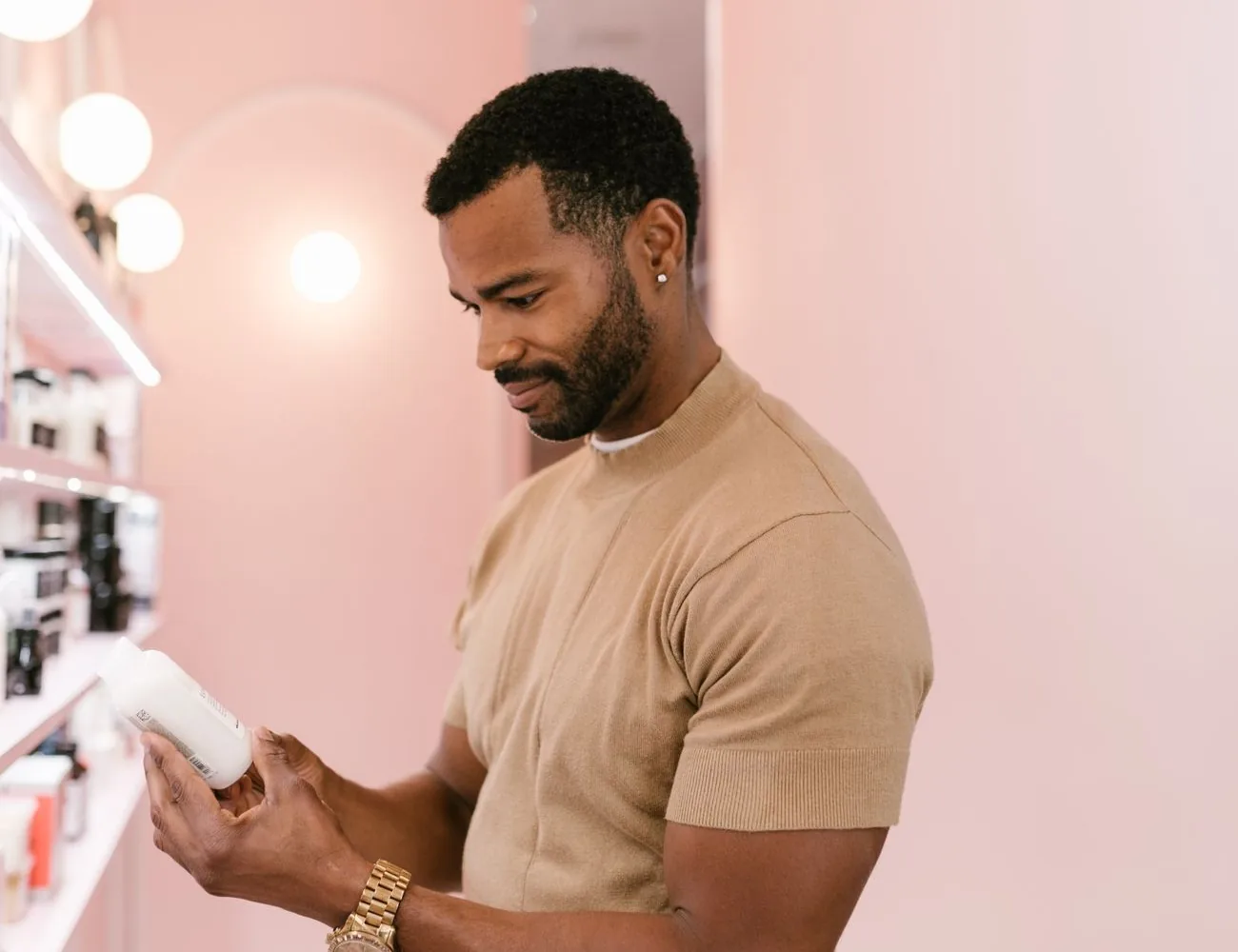
No. Unscented does not necessarily mean fragrance-free. The FDA explains that some products labeled unscented may contain fragrance ingredients used to mask the smell of other ingredients without giving the finished product a noticeable scent. If you are trying to avoid fragrance, do not make the decision by sniffing the bottle or reading only its front panel. Check the available ingredient information and seek clarification when a health-related question remains unanswered.
The word on the front answers only part of the question
Unscented is easy to read as a statement about what is absent. The more useful question is what the product contains and why. A product can lack a noticeable perfume smell while still including fragrance ingredients for a masking purpose. That is the distinction described in the FDA's guide to fragrances in cosmetics, and it is the reason the two expressions should not be treated as interchangeable.
Consider a hypothetical shaving cream whose front panel says unscented. You cannot conclude from that word alone that it contains no fragrance ingredients. Nor should you jump to the conclusion that it definitely contains them. The accurate reading is narrower: the claim does not settle the ingredient question, so you need to look further.
The same restraint applies when a package says fragrance-free. Read the available information in relation to your reason for choosing it. A fragrance-related claim is not a personalized assessment of every ingredient in the product. Someone with a diagnosed allergy needs advice relevant to that allergy, not simply the most reassuring word on the shelf.
Why perfume and everyday grooming share this issue
FDA classifies perfume and cologne intended to make someone more attractive as cosmetics. Its fragrance guidance also discusses fragrance ingredients in products such as shampoos, shower gels, shaving creams, and body lotions. That means a fragrance question is not confined to the bottle you deliberately apply for its smell. It may arise in ordinary steps of a grooming routine.
This does not make those products equivalent in every respect. It identifies a shared labeling question: what can you establish about the presence of fragrance ingredients? Keep that question separate from whether you enjoy a scent, whether you like the packaging, or whether you prefer a particular texture. Those are legitimate preferences, but they answer something else.
Intended use also matters when discussing product classification. A cosmetic description should not be expanded into a claim that a product treats a medical condition. If you are looking for help with recurring skin symptoms, an ordinary grooming label is not a diagnosis or a treatment plan. Bring that concern to a qualified clinician rather than reading a therapeutic promise into a cosmetic purchase.
Read the package as a set of separate statements
First, establish the exact product name and version. Then distinguish the front-panel description, the available ingredient information, and the directions and warnings. A label can contain all of these without each statement having the same purpose. The instruction for how to use a product does not answer every question about whether it suits a particular person's skin.
When shopping online, make sure the ingredient information belongs to the item you are actually ordering. A photograph may be too small to read or a description may discuss a whole range rather than one product. Ask the seller or manufacturer to clarify instead of filling in the missing information from a review of something similar.
If you have been given an ingredient-avoidance list by a clinician, keep it available while reading. Ask for help where names or information are unclear. Do not quietly shorten the list to the ingredients you recognize, and do not assume that a product's short ingredient list proves suitability. The decision depends on the relevant ingredients and your circumstances, not the visual length of the panel.
Allergy risk is a different question from scent strength
The FDA's cosmetic allergen information notes that fragrance ingredients may provoke allergic reactions in some people. It also discusses other allergen groups in cosmetics. Avoid turning that conditional statement into either a universal warning against all grooming products or a promise that removing fragrance removes every possible concern.
A strong smell and a reaction are not interchangeable observations. You may dislike a scent without knowing anything about allergy, or have a skin concern that needs assessment rather than a new scent preference. Record what happened and which products were involved, but do not diagnose yourself from the adjective used on a label.
If reactions recur, consult a qualified clinician and take the packaging or readable photographs with you. This article does not recommend testing a suspected trigger on your skin to prove a theory. A clinician can advise on appropriate evaluation and individual avoidance; a label-reading exercise cannot supply that service.
Ask the manufacturer a question it can actually answer
Instead of asking whether a product is good for sensitive skin, identify the information you need. For example, ask whether the exact product contains fragrance ingredients, including ingredients used to mask other smells. If your question concerns a specific diagnosed allergen, name that concern using the guidance you have received. Keep the product name and version in the same message.
Read the reply for its substance. A repetition of the phrase unscented does not resolve a question about masking fragrance. A broad statement about customer satisfaction does not answer an ingredient question either. If the response remains incomplete, describe the status as unknown rather than converting customer-service language into a medical assurance.
You can make this practical without building a complicated spreadsheet. Save a photograph of the package, the date of your inquiry, and the reply together. That record is especially useful when you need to discuss the product with a clinician or distinguish it from a similarly named item later.
Use the distinction on one product today
Choose a grooming product you already own and read the front and back together. Identify which statements describe scent, which supply ingredients, and which tell you how to use it. If fragrance avoidance matters to you and the answer is still unclear, write a specific question rather than replacing the product on a guess.
For the broader editorial context, see Julian News's standards for health-related coverage, which distinguish education from personalized advice. The useful conclusion is not that every unscented product is unsuitable. It is that unscented alone cannot answer the fragrance question you brought to the shelf.