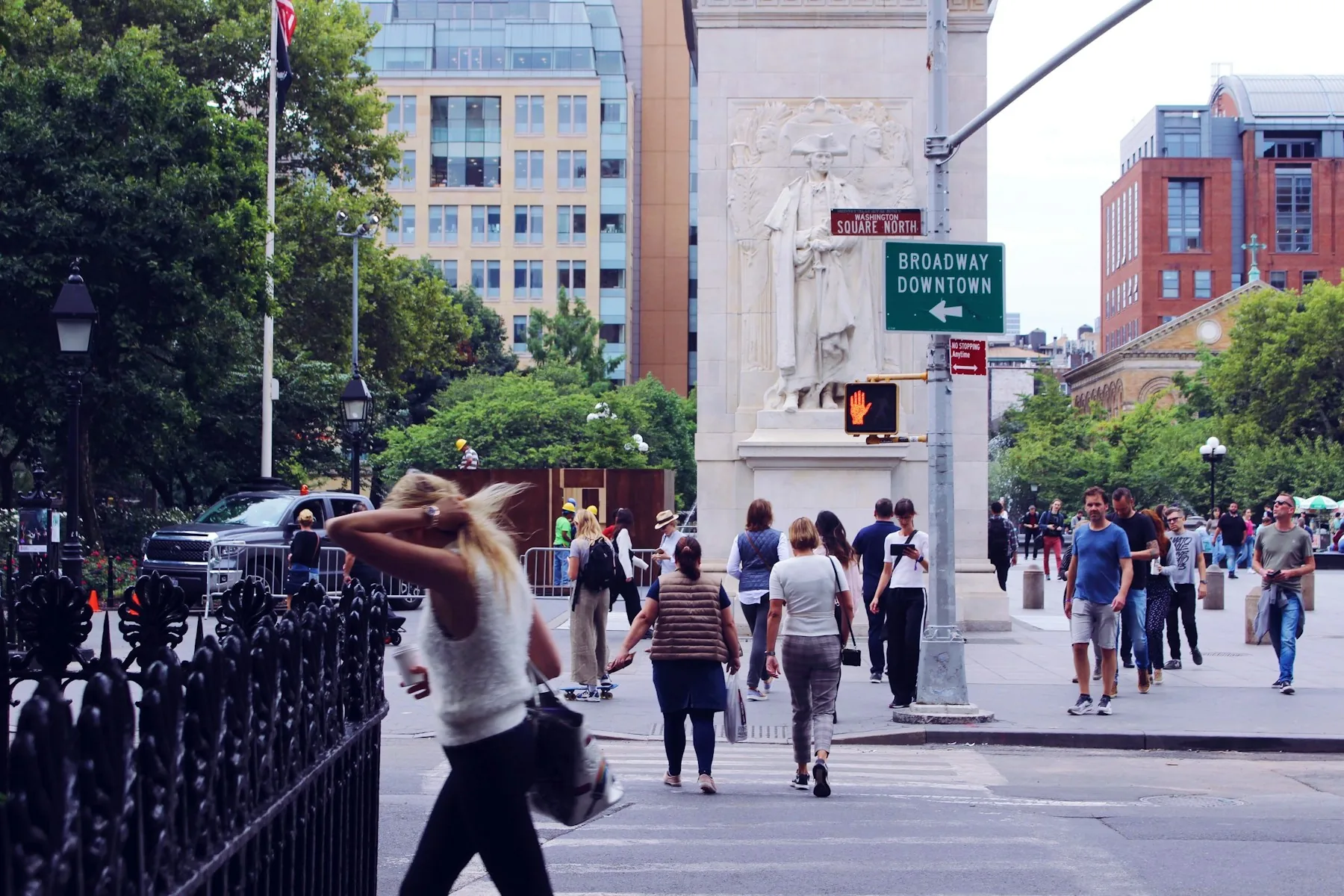
A park event and a street event in New York follow different permitting routes: NYC Parks handles its park special-event process, while the NYC Street Activity Permit Office administers street-event permits. Start with the precise site and activities. Calling a gathering a picnic, cultural celebration, or neighborhood benefit does not by itself identify the permission it needs.
For park events, the stated special-event threshold is twenty or more attendees. Do not transfer that threshold to the street process. Each agency's current guidance needs to be read for the space and proposal it covers. This comparison helps organize that first inquiry; it does not supply approval for either setting.
Draw the footprint before choosing a form
Sketch where participants would gather, where equipment would stand, and where arrival or waiting activity would occur. Label the intended park area, sidewalk, or street space separately when relevant. You are trying to describe what the event would occupy, not simply the address printed on the invitation.
A hypothetical neighborhood arts gathering might fit entirely within a park, or its organizers might also want a separate activity in the adjoining street. Those are different proposals. Do not decide that one application covers both just because the spaces touch or the same people are organizing them.
If you cannot confidently identify who manages the intended space, make that your first question. A map or a photograph may help explain the location to an agency, but it is not permission to use it. Resolve the site question before making commitments based on a guessed administrative route.
Compare the two official starting points
The NYC Parks special-event FAQ describes the park permit process and its requirement for events with twenty or more attendees. Read it against the event you actually intend to organize. A smaller estimated group is not a substitute for checking whether other aspects of the plan raise questions.
The city's street-event permit page is the starting point for the Street Activity Permit Office's street-event process. Consult that guidance for a street proposal rather than adapting a Parks rule from memory. The fact that both processes concern events does not make their conditions interchangeable.
In a park, permission also should not be read as a guarantee of exclusive use of the area. That limitation in Parks guidance is another reason to avoid casual comparisons such as assuming one option simply gives you a private venue outdoors. Evaluate the actual arrangement each process can support.
Send the same complete description to each relevant agency
If more than one type of space is involved, keep the basic event description consistent. Explain the purpose, anticipated attendance, proposed location, activities, equipment, and the parts that remain undecided. Ask which aspects fall within the agency's remit and which need another inquiry.
Avoid presenting a simplified version to obtain an answer that may not fit the fuller plan. For example, do not describe only a seated conversation if the proposal also includes a performance and equipment. These examples identify information to disclose, not a determination here about which additional approvals each feature requires.
Ask questions in terms of the actual proposal: whether the location is handled through that process, what information is needed to assess it, and whether a change in footprint requires a new discussion. Do not ask only which permit is easiest. An easy answer to an incomplete description is not a reliable basis for organizing.
Compare workable plans, not guessed costs or deadlines
Once the responsible offices are clear, compare the options using current official terms. Record any application steps, costs, timing conditions, and restrictions from the relevant guidance or agency response. This article does not quote fees or deadlines because a generic comparison should not stand in for the terms of your particular event.
Ask what remains uncertain before committing to a supplier or telling guests that a date is fixed. If a proposal has not been approved, label it accordingly in your own planning. Do not treat submission, correspondence, or an encouraging preliminary answer as equivalent to an issued permission.
Consider the setting as well as the process. A park gathering designed around shared space may be a different event from a street gathering with a different footprint. Compare what you can responsibly offer attendees in each setting, rather than keeping the same ambitious promise and searching for paperwork to fit it afterward.
Keep track of revisions and confirmations
Maintain one current description of the event and note changes that could affect the answer you received. If the expected attendance grows, equipment is added, or the location shifts, ask whether those revisions change the requirements. Do not keep relying on guidance given for a materially different proposal.
Keep agency communications and issued terms with that description. It should be possible for another organizer to distinguish what was requested, what was answered, and what was authorized. This is an organizational suggestion, not a claim that a particular record format satisfies a legal obligation.
Separate visitor access planning from permit selection, too. Ask about the actual approach, setup, seating, and facilities relevant to attendees. A decision about which office handles an application does not establish that every part of the resulting event will work for every visitor.
Decide what you can honestly announce
Before promoting the event, review the final invitation against the confirmed arrangements. Use the correct location, describe admission or participation accurately, and avoid implying a street closure, private area, or special access that has not been established. If the plan is still tentative, say so rather than allowing a finished design to suggest otherwise.
Julian News's Society coverage is an editorial setting for this comparison, not a permit service. Take your site sketch and concise event description to the responsible office for the next decision. Recheck first-party rules and live venue, event, transit, and accessibility information as the date approaches.
Choose the plan you can explain without qualifications hidden in the small print. The useful comparison is not which office gives the more attractive label. It is whether the location, activities, and confirmed conditions fit together well enough for you to organize the gathering you have described.