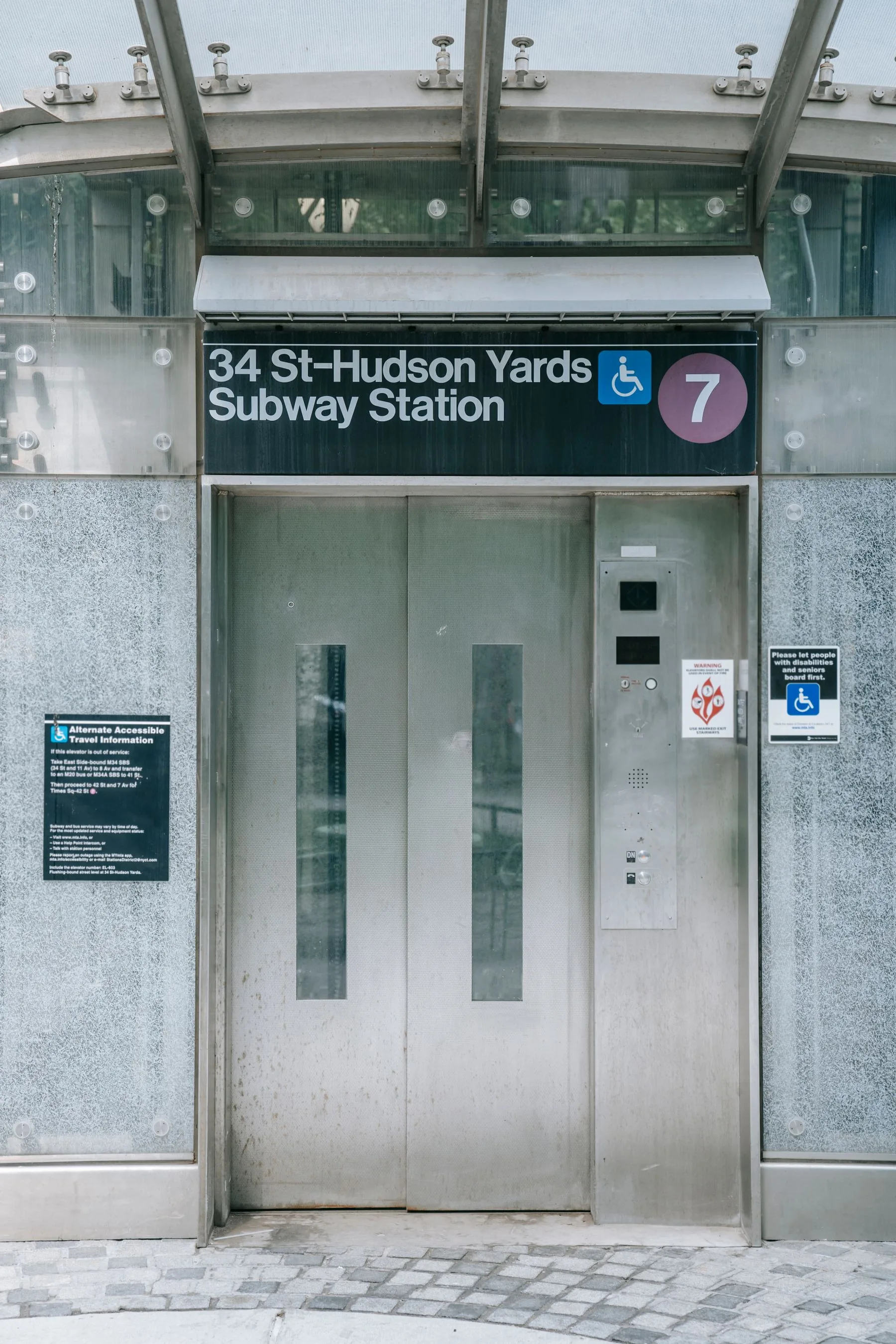
A subway route is useful only if you can complete every part of it. Before an evening out, check the MTA's current service information and the elevator and escalator status for the stations you need. Then compare the street entrances, platforms, transfers and exits, including the return journey. The shortest suggested route is not necessarily the route that meets your access needs.
You can reach the equipment-status resources through the MTA's riding and accessibility guides. A station's general accessibility designation and a report that its necessary elevator is operating answer different questions. Use both rather than relying on a symbol on a saved map.
Describe the journey you need, in your own terms
Start with the conditions that matter to you: avoiding stairs, limiting walking or standing, finding a usable gate, or minimizing complicated transfers. If you are organizing for someone else, ask them which conditions are essential. Do not infer their needs from a mobility aid, their age or what they managed on a previous trip.
Write the actual destination entrance into the plan. A trip to a building's map pin can end on the wrong side for the doorway you intend to use. Confirm the venue's entrance and internal access directly, especially if a restaurant table or event space is separate from the main public entrance.
Decide which uncertainty would stop the trip. For one traveler it might be an unconfirmed elevator; for another it might be the distance between a station and a venue. Treat those as planning requirements, not preferences to negotiate away after tickets or dinner have been booked.
Check operating status, not just station designation
The MTA accessible subway guide advises checking elevator and escalator status before travel. Consult the current status resource linked from the MTA guides and look at the equipment serving your intended path. A report about one elevator should not be read as confirmation that every part of the station is usable.
Match the station name, entrance and direction to your route. Read any description of where the equipment runs, rather than stopping at a broad status label. If you cannot tell whether a reported outage affects your connection, ask the MTA for assistance before making it a necessary part of the evening.
Elevators and escalators are not interchangeable for every traveler. If you need step-free travel, do not interpret a working escalator as a replacement for an unavailable elevator. Likewise, a lift operating at the departure station does not establish a workable transfer or exit at the other end.
Check again shortly before departure. A screenshot can help you remember which entrance you researched, but it cannot update itself when conditions change. Keep the official information available while traveling and reconsider the plan if a new notice affects a required part of the route.
Compare routes by their weakest connection
Lay out the ordinary route suggestion and the accessible alternative beside each other. For each, note how you reach the platform, whether a transfer is required, how you leave the destination station and what street journey remains. Include the return direction in that comparison rather than assuming it is a mirror image.
Imagine two possible plans, without treating either as a real service recommendation. One involves a transfer and a shorter walk. The other avoids the transfer but has a longer street segment. Neither is automatically better. The decision depends on whether the connections are usable, whether the distance works for you and what current service information says.
The MTA subway riding guide directs riders to check current service status before travel. Use that alongside equipment checks. An operating elevator does not establish that the train you expect is stopping there in the direction and period you need.
Keep unknowns explicit. Write that a transfer needs confirmation rather than assigning it a reassuring checkmark. A route with an unresolved essential connection is not ready simply because its estimated journey time looks attractive.
Understand what an AutoGate does
The MTA accessible subway guide describes AutoGates at ADA-accessible stations. It says those stations have at least one AutoGate, available to customers who need access, including people using mobility devices. Read the current entry and payment instructions in the guide before traveling if this is unfamiliar equipment.
An AutoGate addresses passage through the fare-control area. It does not by itself confirm a step-free path from the street to the platform, an accessible transfer or an operating elevator. Keep gate access as one part of the route review rather than using it as shorthand for the whole station.
If the gate arrangement is unclear when you arrive, seek station staff assistance. Do not let a companion improvise a physical workaround or assume you can use stairs. The useful question is how to follow the official, usable path for your journey, not how to preserve the original plan at any cost.
Agree on an alternative before the invitation goes out
Choose a response to disruption with your companions. You might meet at a different venue, shorten the outing or postpone. A different transport option also needs its own access and availability checks; naming it in a message does not make it a confirmed substitute.
Save a compact travel note with the chosen entrances, necessary connections and official pages to revisit. Share the destination meeting point, not just the station name. If friends arrive separately, agree how to communicate a change without requiring anyone to wait at an inaccessible entrance.
Before returning home, refresh the service and equipment information for that leg. A successful outward journey is not confirmation of later conditions. Leave yourself permission to change the evening when the usable route changes.
For further city planning, visit Julian News NYC Living. For this outing, ask one final question before leaving: can I trace a currently usable path from my starting point to the entrance I need? If a necessary connection is still uncertain, resolve it with the relevant operator or change the plan.